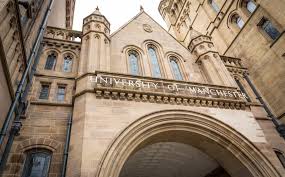

The University of Manchester stands as one of the leading academic institutions globally, renowned for its groundbreaking research, diverse student community, and historical significance. Situated in Manchester, England—a city that played a pivotal role in the Industrial Revolution—the university reflects a rich legacy of innovation and progress.
Historical Background
Founded in 1824 as the Manchester Mechanics’ Institute, the university has undergone several transformations over its nearly two-century existence. A significant milestone occurred in 2004 when the University of Manchester Institute of Science and Technology (UMIST) merged with Victoria University of Manchester, creating the institution we know today.
This union solidified Manchester’s position as one of the largest universities in the United Kingdom, combining a rich heritage with cutting-edge academic resources. Over the years, the university has been home to numerous groundbreaking discoveries, including the splitting of the atom by Ernest Rutherford and the development of graphene by Professors Andre Geim and Konstantin Novoselov.
Academic Excellence
The University of Manchester is consistently ranked among the top institutions globally. It is part of the prestigious Russell Group, an association of 24 leading UK universities renowned for their commitment to research and teaching excellence.
Faculties and Schools
The university is divided into three primary faculties:
- Faculty of Science and Engineering: Known for its contributions to technological advancements and scientific research, this faculty includes schools specializing in chemical engineering, mathematics, and computer science.
- Faculty of Humanities: With a strong focus on arts, social sciences, and business, this faculty houses the Alliance Manchester Business School, one of the leading business schools in Europe.
- Faculty of Biology, Medicine, and Health: A hub for groundbreaking medical research, this faculty collaborates closely with Manchester’s healthcare institutions, contributing significantly to medical advancements.
Global Recognition
The university frequently ranks within the top 50 institutions worldwide in various league tables. In 2023, it was particularly noted for its impact on sustainability and social responsibility, ranking first globally in the Times Higher Education (THE) University Impact Rankings.
Research and Innovation
Research is at the heart of the University of Manchester’s mission. With an annual research income exceeding £300 million, the institution addresses some of the world’s most pressing challenges.
Pioneering Discoveries
- Graphene Revolution: The discovery of graphene, a two-dimensional material with extraordinary properties, earned Professors Andre Geim and Konstantin Novoselov the Nobel Prize in Physics in 2010. The university now hosts the National Graphene Institute, dedicated to advancing applications of this revolutionary material.
- Nuclear Physics: Ernest Rutherford’s pioneering work at Manchester laid the foundation for modern atomic theory and nuclear physics.
- AI and Data Science: The university is a leader in artificial intelligence, big data, and machine learning, collaborating with industries to solve real-world problems.
Research Themes
The university’s research spans numerous fields, including:
- Climate change and sustainable development
- Advanced materials and nanotechnology
- Global health and infectious diseases
- Social inequality and policy development
Campus and Facilities
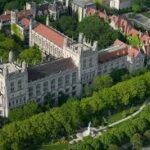
The University of Manchester boasts a sprawling campus that blends historic architecture with modern facilities. Located near the heart of Manchester, the campus provides students and staff access to world-class resources.
Libraries and Study Spaces
The John Rylands Library, a neo-Gothic masterpiece, houses rare manuscripts and books, while the Main Library supports research and learning with extensive collections and study spaces. Together, they reflect the university’s commitment to academic excellence.
Cutting-Edge Research Centers
- National Graphene Institute (NGI): A world-class facility for graphene research.
- Christabel Pankhurst Institute: Focused on digital health and technology.
- Henry Royce Institute: Specializing in advanced materials science.
Student Life
With over 40,000 students from more than 160 countries, the University of Manchester fosters a vibrant and inclusive environment. This diversity enriches the academic and social experiences of students.
Clubs and Societies
The university hosts over 400 student societies, catering to a wide range of interests, from sports and arts to cultural and professional development.
Accommodation
A variety of student accommodation options are available, ranging from modern apartments to traditional halls of residence. The university prioritizes creating a supportive and welcoming environment for all students.
Events and Festivals
The city of Manchester offers a rich cultural scene, and the university complements this with events such as International Week, Manchester Science Festival, and regular academic seminars.
Impact on Society
The University of Manchester is deeply committed to societal impact and sustainability. It aims to address global challenges through research, community engagement, and operational practices.
Social Responsibility
The university’s Manchester Access Programme (MAP) supports students from underrepresented backgrounds in accessing higher education. Its Equity and Merit Scholarships further exemplify its commitment to global equality.
Sustainability Initiatives
Sustainability is a core focus, with efforts to reduce carbon emissions, promote biodiversity, and engage in green infrastructure projects. The university’s work in this area has been recognized internationally.
Notable Alumni
The University of Manchester has a long list of distinguished alumni who have excelled in various fields. Some of the most notable include:
- Alan Turing: Father of computer science and artificial intelligence.
- Sir Arthur Eddington: Astrophysicist known for his work on the theory of relativity.
- Brian Cox: Physicist and popular science communicator.
- Benedict Cumberbatch: Acclaimed actor and advocate for social issues.
Future Prospects
The University of Manchester continues to set ambitious goals for the future. With ongoing investments in research, infrastructure, and community programs, it remains a global leader in education and innovation.
The university’s strategic vision, Our Future, emphasizes sustainability, inclusivity, and interdisciplinary collaboration. As the world faces new challenges, Manchester’s legacy of innovation positions it to contribute solutions on a global scale.
Conclusion
The University of Manchester is more than an academic institution; it is a beacon of progress and discovery. From its historical contributions to modern innovations, the university represents the pinnacle of academic excellence, social responsibility, and global impact. For students, researchers, and society at large, the University of Manchester remains a source of inspiration and opportunity.